
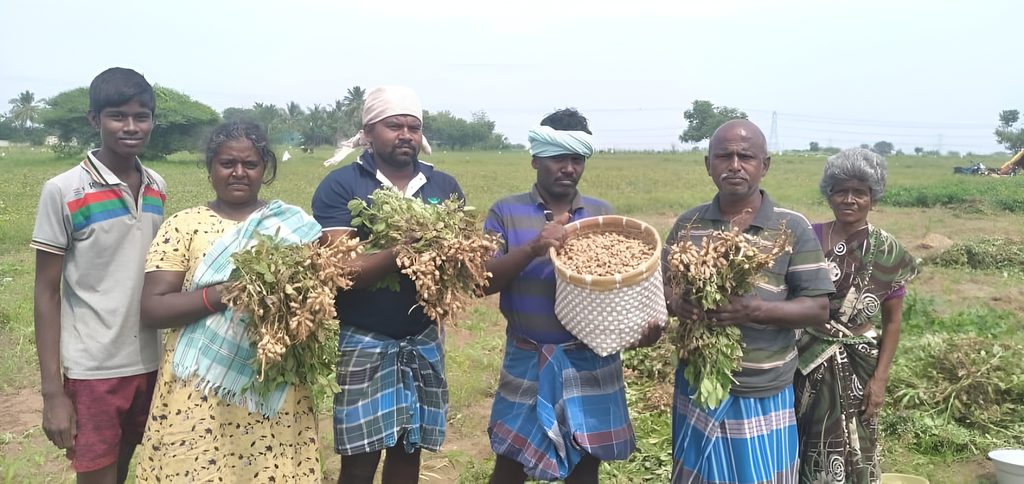
Groundnut cultivation is an important agricultural activity in parts of Kallakurichi district, where farmers grow the crop under suitable irrigated and rain-fed conditions. Agricultural research has also focused on evaluating groundnut varieties in the district through field demonstrations conducted with farmers. Varieties including TMV14, Dharani and CO7 have been evaluated in farmer fields to compare their performance under local growing conditions. Improved varieties can provide farmers with opportunities to explore better yield potential, while demonstration plots offer practical information about crop performance. Such programmes allow farmers to compare different varieties and understand which options may be suitable for their local soil, water availability and seasonal conditions. Seed quality is an important factor in successful groundnut cultivation, and proper seed treatment can support healthy crop establishment. Integrated crop management practices can also contribute to improved cultivation results. Agricultural extension services play an important role in helping farmers make informed decisions about crop varieties and farming methods. Demonstration programmes provide a useful link between agricultural research and practical farming by allowing farmers to observe improved techniques directly in the field. Improved farming methods can contribute to better productivity and provide farmers with additional crop options. Groundnut cultivation can also support crop diversification, which may help farming communities manage agricultural risks. Continued agricultural research and farmer-oriented demonstrations can support the development of locally suitable cultivation practices. Groundnut cultivation therefore remains relevant to the agricultural landscape of Kallakurichi district, while field demonstrations can help improve farmers’ awareness of suitable varieties, seed practices and crop management techniques.