
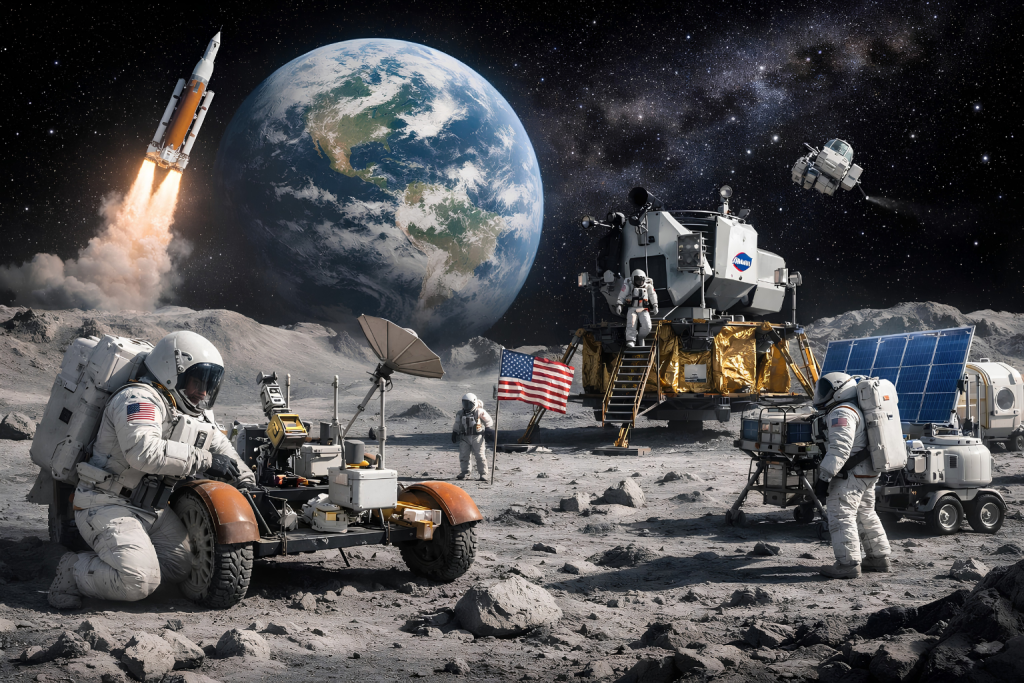
Space Exploration and Lunar Missions Continue to Advance
Space exploration continues to make progress as countries and private organisations develop new missions. The Moon remains an important focus of international space programmes. NASA and other space agencies are working on lunar exploration programmes. The Artemis programme is designed to support long-term human exploration of the Moon. Several countries are also developing their own lunar spacecraft and scientific missions. Lunar missions can provide valuable information about the Moon’s surface and environment. Scientists are particularly interested in studying lunar resources and geological history. Space agencies are developing advanced rockets and spacecraft for future missions. Private companies are increasingly involved in commercial space activities. Satellite technology continues to support communication, navigation and weather forecasting. Earth observation satellites also provide important information about climate and environmental changes. International cooperation is playing an important role in modern space exploration. Countries are sharing scientific knowledge and developing joint space projects. Future lunar missions could support research into technologies needed for deeper space exploration. Mars also remains a long-term target for robotic and human exploration. Space science contributes to advances in engineering and technology. Young scientists and students are gaining opportunities to participate in space-related research. Continued investment is helping expand humanity’s understanding of space. The growing number of space missions has made exploration an important part of global science news. Space exploration therefore remains one of the major technology and science stories worldwide.